Why Band 28 Matters in Australia
Band 28 is a low-frequency LTE band (700 MHz) widely deployed by Australian carriers.
From a radio perspective:
- Lower frequency → longer range
- Lower frequency → better penetration through walls and terrain
It forms the coverage layer of LTE networks.
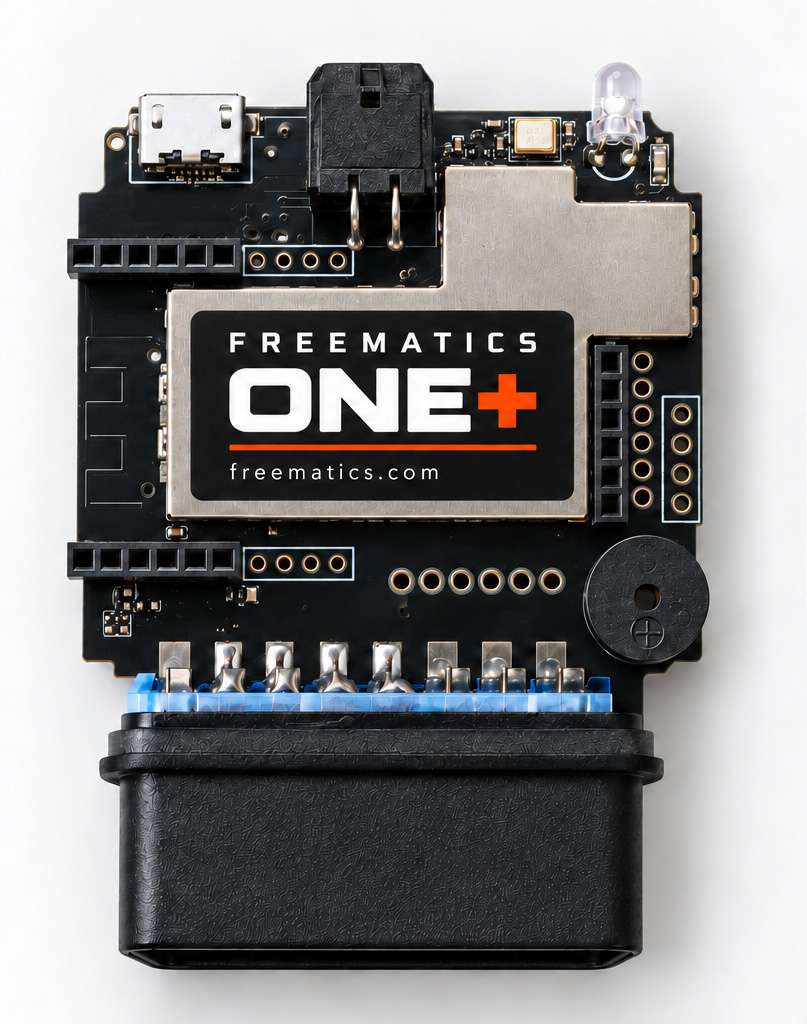
If a tracking device doesn’t support Band 28, it will eventually lose connectivity in Australia – which has enormous regional/rural areas as well as incredibly long and deep tunnels like those under metropolitan Sydney. That’s why Freematics ONE+ now ships with SIM7670 (B28 supported) for reliable Australia deployments.
Happy Australia Day
Please excuse us for taking a break and getting away for the last bit of summer. We will be happily processing your orders from 29 Jan.

Freematics ONE+ Traccar Edition with option of SIM7670E
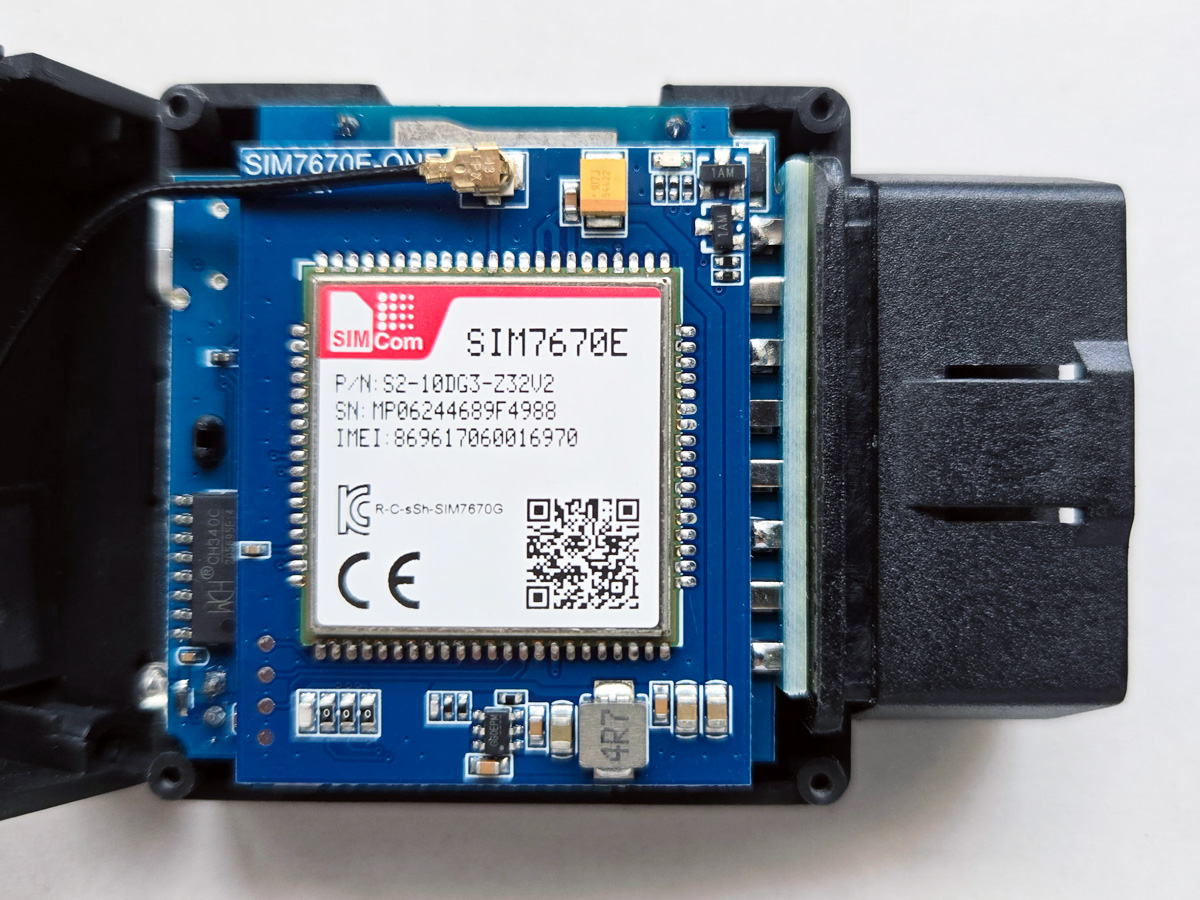
The community beloved Freematics ONE+ Traccar Edition now comes with option of SIM7670E which is SIMCOM’s latest LTE CAT-1 cellular module based on Qualcomm QCX216 chipset. SIM7670E is designed for Europe with support for LTE-FDD B1/B3/B5/B7/B8/B20. It also adapts to Australia perfectly with its supports of B28.

Sending custom CAN messages with Freematics ONE+
Several users have brought up the discussions about sending custom CAN messages with Freematics ONE+. Well, this has always been possible but we just didn’t include API for doing this in the OBD library due to security concern as ONE+ could be internet connected. With EV uprising, sending custom CAN messages seems to be the only way to extract data from these vehicles though proprietary information is needed to make the data meaningful. We have now added simple APIs for sending CAN messages to ECU in a move to open up more possibilities and leave the hard job to the community. Following is an example of send a CAN message for clearing DTC.
// send a CAN message (clearing DTC)
obd.setCANID(0x7E0);
obd.setHeaderMask(0xFFFFFF);
obd.setHeaderFilter(0x7E8);
byte msg[] = {0x14, 0xFF, 0x00};
char buf[128];
if (obd.sendCANMessage(msg, sizeof(msg), buf, sizeof(buf))) {
// print the ECU response to the message
Serial.println(buf);
}

Firmware update for Freematics OBD-II Emulator MK2
We know it’s been a while but a new firmware for Freematics OBD-II Emulator MK2 is finally out. A few minor issues have been fixed. Protocol setting persistence was implemented meaning the emulator will stick to the same protocol on each power cycle. The two variants of the hardware (with and without J1850 protocol) now use the same firmware image which comes with the updated GUI software package (version 1.1).
Network settings and status via App for Freematics ONE+
With latest telelogger, it is now possible to change network settings (e.g. cellular network APN) and monitor network status for Freematics ONE+ via Freematics Controller App (through BLE). The telelogger ESP-IDF package is also updated. All Freematics ONE+ Model B and Model H shipped from now have BLE enabled firmware pre-flashed.


Shifting to u-blox M10 GNSS
All of Freematics products involving GNSS have shifted to u-blox M10 solution which has better position accuracy (1.5m) and lower power consumption comparing to previous M8 solution.
From the datasheet:
The u-blox M10 supports concurrent reception of four GNSS (GPS, GLONASS, Galileo, and BeiDou). The
high number of visible satellites enables the receiver to select the best signals. This maximizes the
position availability, in particular under challenging conditions such as in deep urban canyons. u-blox
Super-S (Super-Signal) technology offers great RF sensitivity and can improve the dynamic position
accuracy with small antennas or in non-line-of-sight scenarios.
The extremely low power consumption of 25 mW in continuous tracking mode allows great power
autonomy for all battery-operated devices, such as asset trackers, without compromising on GNSS
performance.